
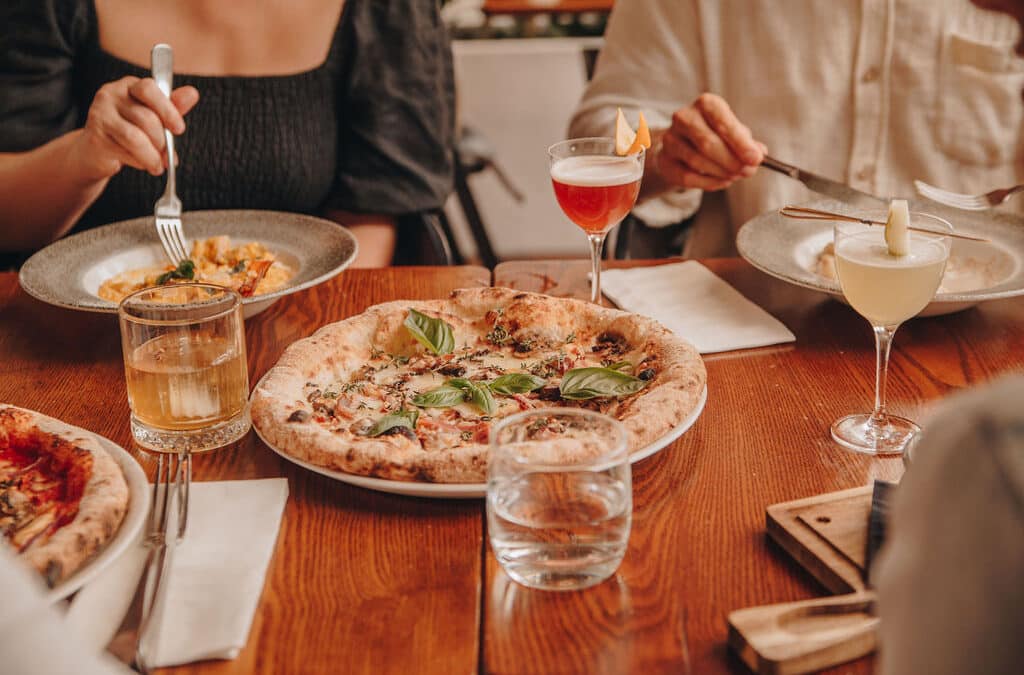
Traditional vs modern Italian cuisine is more than a debate about pizza toppings or pasta sauces. It’s a conversation about heritage, innovation, and how Italian culinary traditions continue to evolve on plates around the world — including right here on the Sunshine Coast.
Traditional vs Modern Italian Cuisine: What’s the Difference?
The first thing that hits the senses at a true Italian restaurant on the Sunshine Coast is not the menu. It is the crackle of a woodfired oven, the scent of slow-rising dough, and the perfume of tomatoes, basil, and garlic drifting through the room. On a warm Mooloolaba evening, that moment can feel like a quick trip to Naples without leaving the Sunshine Coast.
Italian food is so loved across the globe that it sometimes gets a little lost in translation. Dishes change from country to country, toppings get added, cream appears where it never should, and people still call it “Italian”. That is where the real conversation around traditional vs modern Italian cuisine begins: what is faithful to centuries of Italian culinary traditions, and what belongs to a newer wave of contemporary Italian food?
In this article we walk through what defines traditional Italian cuisine, how modern Italian cuisine has grown from those roots, and how to tell the difference on the plate. We then bring it home to Mooloolaba and show where Il Vento Italian & Woodfired Pizza sits in the traditional vs modern Italian cuisine story, so readers can feel confident when they next book a table for authentic woodfired pizza on the Sunshine Coast.
Key Takeaways
- Traditional Italian cuisine rests on simple recipes, regional dishes, and fresh seasonal produce, where a few top-quality ingredients do all the talking on the plate. This approach keeps flavours clean, honest, and deeply tied to local culture across Italy.
- Modern Italian cuisine respects those roots while adding new ideas such as fusion influences, lighter twists, and more artistic presentation, which appeal to current Italian dining trends around the world. In the conversation about traditional vs modern Italian cuisine, both sides can add something special.
- The heart of authentic Italian cooking still beats through both styles whenever chefs focus on balance, care, and real ingredients, even when the dish looks new. That is why the evolution of Italian cuisine can welcome change without losing its soul.
- Il Vento Italian & Woodfired Pizza in Mooloolaba stays firmly grounded in tradition with woodfired Italian cooking, daily house-made pasta, and classic Italian recipes, giving Sunshine Coast locals and visitors a truly authentic taste of Italy.
What Is Traditional Italian Cuisine?

To make sense of traditional vs modern Italian cuisine, it helps to start with a simple truth. There is no single “Italian menu”. Italy is closer to twenty food cultures sharing one flag, each shaped by its own history, climate, and produce. The butter-rich Alps in the north feel very different from the sunlit, olive-covered hills and coastal towns in the south. For diners on the Sunshine Coast, recognising this helps explain why one Italian restaurant in Mooloolaba might feel different from another, even when both claim authentic roots.
Traditional Italian cuisine lives by a clear philosophy: keep dishes simple, trust the produce, and let flavour come from the quality of each ingredient rather than from heavy sauces or tricks. Extra virgin olive oil, ripe tomatoes, garlic, basil, and cheeses such as Parmigiano-Reggiano and Mozzarella di Bufala appear again and again. In authentic Italian cooking they are treated with respect, used in just the right amount so they lift a dish without drowning it.
Regional Italian food shows this idea in thousands of ways:
- Northern Italy: Cooler weather and mountain life led to creamy risottos and warm bowls of polenta. A dish like Risotto alla Milanese from Lombardy uses only rice, saffron, stock, and cheese, yet feels rich and deeply comforting. In nearby Veneto, a simple dessert of coffee-soaked biscuits and mascarpone became the now-famous tiramisù.
- Central Italy: Further south in the centre of the country, pasta steps into the spotlight. Rome gives the world Spaghetti alla Carbonara, made the traditional way with guanciale, egg, Pecorino Romano, and black pepper. No cream, no shortcuts. In Tuscany, bread is baked without salt, a habit that began centuries ago and now pairs perfectly with flavour-packed cured meats, olive oil, and hearty soups.
- Southern Italy And The Islands: Head down to the south and the story changes again. Naples is home to the original pizza Margherita, a thin dough base topped with San Marzano tomatoes, fior di latte or mozzarella, basil, and good olive oil. In Sicily, the mix of cultures over time brought sweet ricotta-filled cannoli and even couscous into everyday life. These dishes show how Italian food history is long, layered, and proudly local.
“True Italian cooking isn’t about complexity — it’s about letting extraordinary ingredients speak for themselves.”
Behind all this sits something deeper than recipes. Traditional Italian cuisine carries the spirit of convivialità, the joy of gathering around a table, talking, laughing, and stretching a meal into an afternoon. It links to la dolce vita, the sweet side of life, where food is never rushed. Even history shows that “tradition” has always moved slowly. Tomatoes, now a symbol of Italy, only arrived from the Americas centuries ago, proof that the evolution of Italian cuisine has always taken in new ideas while staying true to this simple, generous way of eating. Many family-run restaurants across Italy — and places such as Il Vento in Mooloolaba — still build their menus around this same feeling.
How Modern Italian Cuisine Has Evolved

Modern Italian cuisine steps forward from that strong base of tradition rather than turning away from it. When we talk about traditional vs modern Italian cuisine, we are really looking at how chefs use the same roots to create something that feels right for life today. The pan, the dough, and the sauce may be familiar, yet flavours and presentation tell new stories — whether you are eating in Rome, New York, or a coastal town like Mooloolaba.
- Fusion With Other Cuisines: One clear thread in this evolution of Italian cuisine is fusion. Chefs mix Italian techniques with ingredients or ideas from other countries. Truffle shavings stirred through a delicate risotto add luxury to a humble northern classic. In Japan, Wafu Italian restaurants pair al dente pasta with dashi broth or seaweed, creating dishes that feel both Italian and Japanese. On the Sunshine Coast, cooks bring together Italian methods and local seafood, such as a marinara sauce rich with Mooloolaba prawns and Queensland scallops, keeping the soul of the dish Italian while using the best of local waters.
- Health-Focused Twists: Another strong trend in contemporary Italian food is a focus on health and lightness. People want all the pleasure of classic Italian recipes without a heavy feeling afterwards. Whole-grain or spelt pasta, gluten-free pizza bases, and plant-forward plates answer that wish. A bowl of zucchini noodles tossed with basil pesto, cherry tomatoes, and toasted nuts still tastes deeply Italian, even though the “pasta” has changed shape.
- Artistic Presentation: Presentation also plays a bigger role in modern Italian dishes. Many chefs treat the plate as a canvas, arranging ingredients with colour and texture in mind. A Caprese salad might be deconstructed into dots of balsamic, clouds of soft cheese, and neat slices of heirloom tomato. The flavours remain true to Italian culinary traditions, yet the look suits fine-dining photos and special nights out.
All this sits within a much longer global story. When large numbers of Italians moved overseas in the late nineteenth and early twentieth centuries, they carried their food memories with them. Spaghetti and meatballs, New York slices, and deep-dish pizza grew from that movement, shaped by what was cheap and easy in new countries. Modern Italian cuisine, whether in Australia, America, or Japan, continues this pattern, showing that change has always been part of the Italian kitchen.
Traditional vs Modern Italian Cuisine: Key Differences at a Glance
With so many styles and plates to choose from, it helps to see traditional vs modern Italian cuisine side by side. Both approaches can taste incredible. They simply answer different questions about how people want to eat, share, and enjoy Italian food — whether you are choosing an Italian restaurant on the Sunshine Coast or cooking at home.
| Feature | Traditional Italian Cuisine | Modern Italian Cuisine |
|---|---|---|
| Core Philosophy | Simplicity and respect for a few high-quality ingredients | Innovation, reinvention, and playful ideas |
| Ingredients | Classic, regional, and strongly seasonal produce | Global, fusion touches, with more health-focused swaps |
| Techniques | Time-honoured methods such as woodfired ovens and hand-made pasta | Contemporary methods and more experimental approaches |
| Presentation | Rustic plates that look generous and unfussy | Artistic plating that highlights colour and texture |
| Cultural Focus | Community, memory, and convivialità around the table | Individual creativity and a global palate |
| Famous Examples | Neapolitan Margherita, Carbonara, Tiramisù | Truffle risotto, zucchini pesto “pasta”, fusion-style pizzas |
Arguments about authenticity are part of the fun. One person insists carbonara must never see a splash of cream, another happily defends pineapple on pizza. These debates over traditional vs modern Italian cuisine do not mean one side loves Italy more than the other. They show just how strongly people care about these dishes.
“The debate isn’t about right or wrong — it’s about how deeply Italian food has embedded itself into the world’s heart.”
The most trusted modern Italian restaurants still lean on the same quiet rules as nonna did. They source good produce, balance salt, fat, acid, and texture, and respect the story behind each dish. When those pieces are in place, both traditional Italian cuisine and modern Italian cuisine have a well-earned seat at the table.
Where Does Il Vento Italian & Woodfired Pizza Fit In?

On the Sunshine Coast, many menus mix all kinds of modern Italian cuisine with global flavours. Il Vento Italian & Woodfired Pizza chooses a different path. The restaurant stands proudly on the traditional side of traditional vs modern Italian cuisine, guided by the belief that real Italian food does not need heavy twists to feel special.
The woodfired oven sits at the centre of this approach. Il Vento’s pizzas follow the spirit of Naples, with slow-proved dough, simple toppings, and blistered edges from true woodfired Italian cooking. That live flame gives a light char and gentle smokiness that no standard oven can copy. A Margherita here shows what happens when San Marzano-style tomatoes, proper mozzarella, basil, and skilled hands come together over burning wood. If you are craving woodfired pizza in Mooloolaba, this is where those details matter most.
Pasta receives the same traditional care. At Il Vento, house-made pasta is prepared daily with high-grade flour and fresh eggs. This is not a once-a-week treat but a daily promise to guests. Shapes are matched to sauces in the classic Italian way, whether that means ribbons of tagliatelle carrying a slow-cooked ragù or delicate strands of spaghetti coated in a silky seafood sauce made from local catch.
Awards and kind guest feedback back up this commitment. Il Vento has built a strong reputation as a go-to Italian restaurant in Mooloolaba, supported by many five-star Google reviews and positive comments from visitors. Diners mention not only the flavour of classic Italian recipes but also the warm service, generous portions, and relaxed setting that suit family dinners, date nights, and big celebrations.
All of this plays out beside the water in Mooloolaba, where the easy coastal lifestyle pairs perfectly with la dolce vita. Long meals, shared plates, children laughing, friends toasting with Italian wine or a spritz, and the smell of pizza from the woodfired oven fill the room.
“Good Italian restaurants are not just about food; they are about how you feel when you sit down and when you leave.”
For anyone curious about traditional vs modern Italian cuisine, Il Vento offers a clear answer. Here, tradition leads the way, and guests are invited to taste the difference for themselves.
Conclusion

The story of traditional vs modern Italian cuisine is richer than any single dish. Traditional Italian cuisine draws strength from regional roots, simple methods, and an almost stubborn faith in good ingredients. Modern Italian cuisine builds on this, introducing fusion ideas, lighter plates, and striking presentation that reflect how people like to eat now.
Rather than a fight between old and new, the tension between these styles works more like an ongoing conversation. It keeps Italian culinary traditions alive, relevant, and exciting for each new generation of cooks and diners. Both a rustic bowl of hand-made pasta and a reimagined plate of contemporary Italian food can honour the same values when they are cooked with care.
On the Sunshine Coast, Il Vento Italian & Woodfired Pizza stands as a loving tribute to the traditional side of that story. With authentic woodfired pizzas, fresh house-made pasta, and a warm, welcoming room beside the Mooloolaba water, it brings the heart of Italy to local tables. The next time a craving for Italian food appears, gather friends or family, book a table at Il Vento, and taste how timeless tradition can feel.
FAQs
What makes Italian cuisine “traditional”?
Traditional Italian cuisine focuses on fresh, regional ingredients used in simple ways that highlight natural flavour. Dishes often follow methods passed down through families and reflect local geography and seasons. Classics such as Neapolitan pizza, hand-made pasta, and Roman-style Carbonara show these roots clearly.
Is woodfired pizza considered traditional Italian?
Yes, woodfired pizza is deeply linked to Italian food history, especially in Naples. The high heat of a woodfired oven creates soft, chewy bases with light charring and bubbly crusts that standard ovens cannot match. For many Italians, this style defines authentic pizza. Restaurants such as Il Vento in Mooloolaba keep this tradition alive with their own woodfired ovens.
Where can I find authentic Italian food on the Sunshine Coast?
For a genuine Italian experience on the Sunshine Coast, Il Vento Italian & Woodfired Pizza in Mooloolaba is a standout choice. Guests enjoy woodfired pizzas, daily house-made pasta, and warm service in a relaxed coastal setting, backed by a strong track record of five-star Google reviews and kind words from critics and locals.
Ready to taste the difference between traditional vs modern Italian cuisine for yourself?
Book a table at Il Vento Italian & Woodfired Pizza and experience authentic woodfired pizza, daily house-made pasta, and true Italian hospitality on the Sunshine Coast.
• Book your table online now
• View the full menu before you arrive
• Order takeaway for a relaxed night at home
Discover why locals choose Il Vento when they want real Italian flavour without compromise.