

fresh pasta vs dried pasta made most often from cooked potato and flour, with salt and sometimes egg. Other traditional forms use drained ricotta or semolina cooked in milk. Each base produces a different texture, cooking method and sauce match; gentle mixing helps potato gnocchi stay soft rather than heavy.
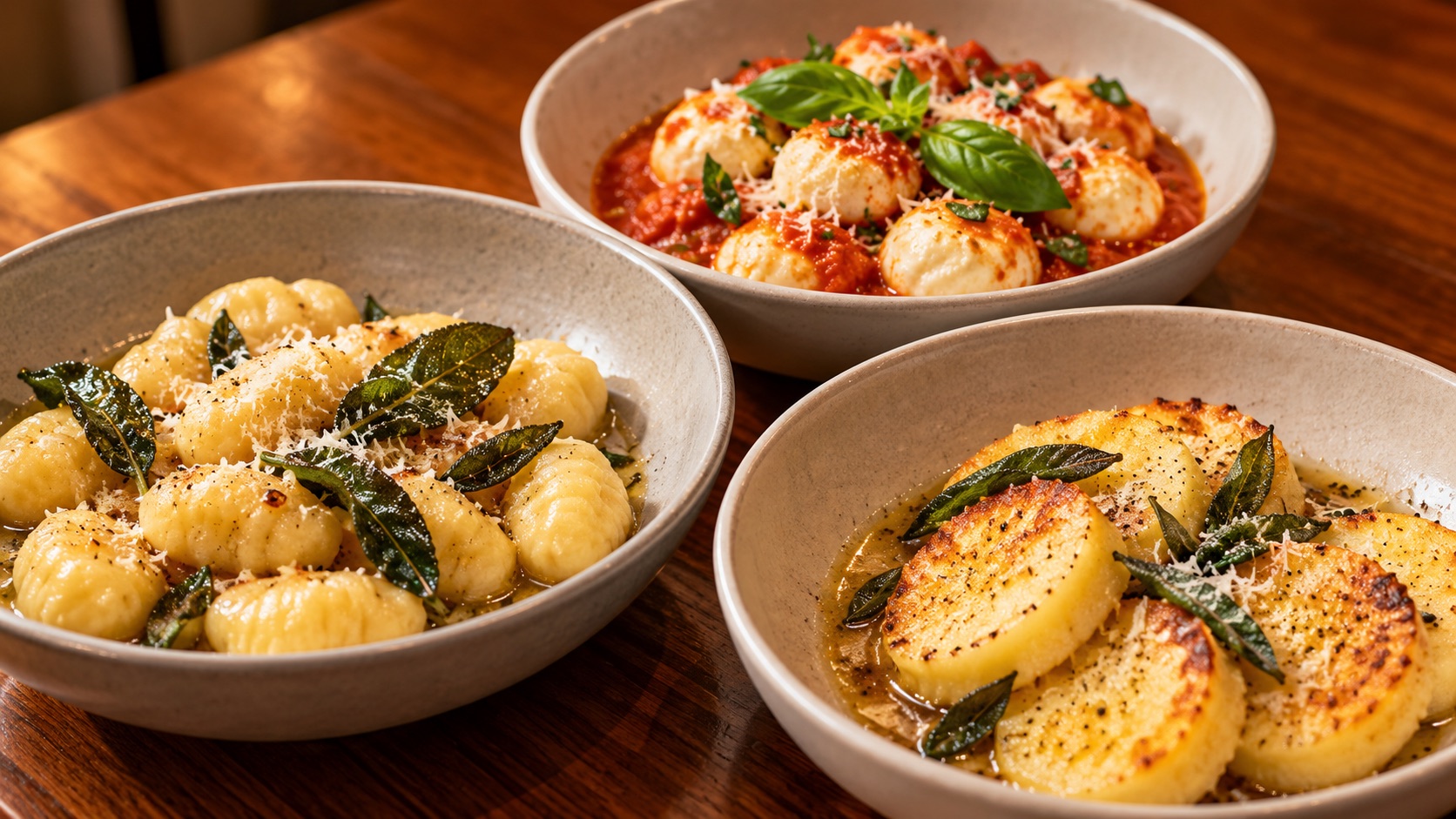
The main risk is a heavy, gummy result that sits like dough rather than melting into the sauce. Potato choice, flour amounts and mixing all change the final texture. Sauce also matters, because rich toppings can weigh down already soft dumplings.
At Il Vento Italian Restaurant & Woodfire Pizza, Mooloolaba, diners should check the current menu before ordering. The guide below explains the main styles, signs of quality, useful dietary checks and sauce pairings.
Key Takeaways
Classic potato gnocchi uses potato, flour, salt and optional egg. Dry, floury potatoes need less flour. Less flour usually means a softer bite.
Ricotta gnocchi uses drained cheese, while semolina gnocchi uses wheat. Ricotta dumplings are delicate and boiled. Semolina rounds are baked until golden.
Light gnocchi needs gentle handling and a balanced sauce. Heavy gnocchi often has excess flour or water. A good sauce coats each piece without drowning it.
What Is Gnocchi Made Of?
Gnocchi is made from a cooked base shaped into small Italian dumplings, rather than conventional pasta. Classic potato gnocchi combines cooked potato, plain flour, salt and sometimes egg, but each ingredient needs balance. The question of what gnocchi is made of has no single answer because recipes vary across Italy. Ricotta, semolina, pumpkin, spinach and bread can all form the base, regional Italian cuisine.
Potato versions sit beside pasta on many menus, yet their method is quite different. fresh pasta guide and water or egg, then receives firm kneading. Gnocchi starts with cooked ingredients and needs a light touch, since excess mixing develops gluten and makes dumplings chewy. The aim is enough flour to hold the pieces together in boiling water while letting the potato flavour and soft centre lead.
The Four Main Ingredients In Potato Gnocchi
What is gnocchi made of in its best-known form? Potato gnocchi uses floury potato, plain flour, salt and optional egg. Floury potatoes hold less water than waxy potatoes, so they need less flour and produce a lighter dough, and home cooks looking for a wheat-free version can follow a four-ingredient gluten-free gnocchi method that relies on the same starch-to-flour balance. Plain flour binds the mixture, though too much gives it a firm, doughy chew.
Potatoes provide starch, flavour and softness.
Flour supplies enough strength for boiling.
Egg can bind the dough.
Salt seasons both the dough and cooking water.
Egg is not mandatory, and many family recipes leave it out. A small egg can make shaping easier, but too much liquid may call for extra flour. Potato gnocchi are cooked-potato dumplings, while pasta dough is usually flour-based from the start. That difference explains their softer, pillowy character.
How Potato Gnocchi Dough Is Made Without Making It Heavy
What is gnocchi made of after the dough comes together? The same few ingredients work best when cooks remove moisture and avoid overworking them. Baking or steaming potatoes limits water absorption better than boiling, although carefully drained boiled potatoes can still work well. A potato ricer or food mill gives warm potato an even texture without turning it sticky.
After ricing, let steam escape before adding flour gradually with salt and optional egg. Bring the dough together lightly, roll it into ropes, cut small pieces and press them over a fork or gnocchi board. Those ridges hold pesto, tomato sugo or butter sauces more effectively. Cook one test gnocchi before making the full batch, then add only a little more flour if it breaks apart.
Potato, Ricotta And Semolina Gnocchi: What Is The Difference?
Potato, ricotta and semolina gnocchi differ in their main ingredient, texture and cooking method. Gnocchi describes a broad Italian family of dumplings, so no one recipe defines every version. The answer to what gnocchi is made of changes with the style on the menu. Knowing the base helps diners choosing wine for dishes.
| Gnocchi Type | Main Base | Texture | Cooking Method | Suitable Sauces |
|---|---|---|---|---|
| Potato | Cooked potato and flour | Soft and pillowy | Boiled | Tomato, pesto, ragù, mushroom |
| Ricotta | Drained ricotta and flour | Mild and delicate | Boiled | Sage butter, greens, light tomato |
| Semolina | Semolina, milk and cheese | Creamy with a firm top | Baked | Butter, cheese and herbs |
Ricotta Gnocchi: Light, Creamy And Delicate
Ricotta gnocchi are dumplings made mainly with well-drained ricotta, flour and often egg. What gnocchi is made of here depends on the moisture in the cheese, since wet ricotta needs more flour and can become dense. Well-made ricotta gnocchi tastes mild, soft and delicate. Butter and sage, mushrooms, tomato or seasonal greens suit this gentle style.
Semolina Gnocchi: The Baked Roman-Style Version
Semolina gnocchi, known as gnocchi alla Romana, are baked dumplings linked with Rome. Semolina is cooked with milk, butter, egg yolk and grated cheese, then cooled and cut into rounds. The rounds bake until golden instead of boiling individually. Their creamy middle and browned top differ from potato gnocchi, and semolina contains wheat.
Other Regional Gnocchi Styles To Know
Other regional styles show why what gnocchi is made of depends on place, season and household habit. Pumpkin or squash gnocchi gains a sweeter flavour when cooks roast the flesh first, which also reduces moisture. Spinach gnocchi often includes ricotta or potato, with spinach squeezed dry before mixing. Bread gnocchi uses leftover bread, milk, egg and flour in the resourceful cucina povera tradition.
Why Does Gnocchi Become Heavy Or Gummy?
Heavy or gummy gnocchi results when moisture, flour and handling fall out of balance. Good gnocchi stays tender and light while holding together when coated in sauce. Waxy potatoes, wet ricotta or overboiled vegetables can make dough sticky, which often leads cooks to add too much flour. Kneading then develops gluten, turning a soft dumpling into something closer to bread dough.
Size and timing also affect texture. Large pieces take longer to cook and can feel dense in the centre. Shaped dumplings left sitting too long may absorb moisture and soften before cooking. Overcooking can leave gnocchi waterlogged and fragile, even when the dough began well. Dry ingredients, sparing flour and minimal handling remain the reliable rule.
How To Tell If Gnocchi Is Well Made
Well-made gnocchi feels soft and pillowy, with a gentle bite rather than a rubbery chew. It holds its shape without a raw flour taste, and the sauce coats each dumpling evenly. Pan-finished potato gnocchi can have a light golden crust with a soft centre. Baked semolina gnocchi naturally feels firmer, so it should not be judged by the same standard.
The Main Reasons Gnocchi Feels Dense
Dense gnocchi often begins with wet potatoes, excess flour or vigorous mashing. A food processor can make potato gluey, while kneading like bread creates too much gluten. Oversized pieces, dough left too long and overcooking can add further weight. Use dry ingredients, add flour slowly and handle the dough as little as possible.
How Are Gnocchi Served, And Are They Suitable For Dietary Needs?
Gnocchi is commonly served as a primo, or first course, alongside pasta and Italian dining experience. Potato-based gnocchi is not automatically gluten-free, vegan or suitable for every diet. Traditional recipes often contain wheat flour and may include egg, while sauces can introduce butter, cheese, nuts, seafood or meat ragù. Diners with coeliac disease, allergies or strict dietary needs should ask about ingredients and kitchen preparation before ordering.
Sauce Pairings That Suit Each Type Of Gnocchi
Sauce pairings should match the style of gnocchi instead of hiding its texture. Potato gnocchi suits tomato and mozzarella, pesto, mushroom sauce, ragù or best dishes Italian restaurant. Ricotta gnocchi works well with sage butter, vegetables or light tomato. Semolina gnocchi is usually baked with butter and cheese, making it richer than boiled dumplings.
Gluten, Egg, Dairy And Vegetarian Considerations
Gluten, egg and dairy checks matter because what gnocchi is made of changes from recipe to recipe, and research on gluten-free pasta labeling shows how ingredient transparency affects consumer trust in similar wheat-based products. Traditional potato gnocchi often contains wheat flour and may contain egg. Ricotta gnocchi includes dairy, while semolina gnocchi contains wheat and commonly dairy. Sauces may add pesto nuts, seafood, butter, cheese or meat, so confirm details before ordering.
Gnocchi At Il Vento Italian Restaurant & Woodfire Pizza, Mooloolaba: Editorial Review Note
Editorial review is required before publishing restaurant-specific claims about gnocchi preparation, ingredients, sauces, dietary options or current availability. The supplied material does not provide independently verified details for these points.
For current restaurant information, review the menu and contact the restaurant with questions about allergens, coeliac requirements or dietary suitability. This guide does not state that a particular gnocchi dish is currently available or suitable for any dietary need.
In Summary
Gnocchi can be made from potato, ricotta, semolina and many regional ingredients. Classic potato gnocchi usually combines cooked potato, flour, salt and sometimes egg. What gnocchi is made of matters because the base decides its texture, cooking method and ideal sauce. Dry ingredients and gentle handling help keep every dumpling light.
When choosing a dish, consider the gnocchi style and the sauce together. Potato gnocchi can carry ragù or tomato, while ricotta prefers a lighter touch and semolina suits baking. For current menu information in Mooloolaba, check Il Vento Italian Restaurant & Woodfire Pizza booking before visiting.
Frequently Asked Questions
Frequently asked questions about gnocchi often focus on storage, cooking and packaged products. Most answers depend on the recipe, size and ingredients used. What gnocchi is made of also affects how it freezes, cooks and reheats.
Can You Freeze Homemade Gnocchi?
Yes. Freeze uncooked homemade gnocchi in a single layer until firm, then place it in a sealed container. Cook frozen gnocchi straight from the freezer rather than thawing it first.
Do Gnocchi Float When They Are Cooked?
Gnocchi usually rises to the surface as it cooks. Floating is a useful sign, though size and recipe affect timing. Remove one piece and test it if the centre seems undercooked.
Can You Pan-Fry Gnocchi Instead Of Boiling It?
Fresh potato gnocchi is usually boiled first, then finished in a pan if desired. Pan-frying creates a crisp outer layer and soft centre. Some packaged varieties can cook directly in a pan; follow the packet instructions.
Is Packaged Gnocchi Already Cooked?
Packaged gnocchi varies by product, so follow the label instructions. Shelf-stable products often feel firmer than fresh handmade gnocchi. Check the ingredient list for flour, egg, dairy and other allergens.
How Long Does Cooked Gnocchi Last In The Fridge?
Cool cooked gnocchi promptly and store it in a sealed container in the fridge. Follow applicable food-safety guidance and use it within a short period. Reheating it in sauce or a pan can help restore its texture.